Labels

Showing posts with label artistry. Show all posts

Thursday, May 5, 2016

Shakuhachi man {musical notes}


Ok, some musical notes to accompany my first post about the ideas behind the song that opens the Setsu album.

Musically, the song evolved out of the guitar riff/chords that you hear in this final version only in the opening and final verses. This bit:


It's an open A-chord for two bars followed by a bar each of G and D chords that keep the C-sharp third note front-and-centre. Given that these are all open chords I came up with a hammer-on, finger-picking style that lent a jaunty air to the whole thing, enhanced by the rising vocal melody that evolved over the top of the chord sequence. (Actually the delivery of the vocal line changed a bit during recording as my voice kept cracking on the top notes of the quiet verses. That's why the sultry intro vocal is an octave lower than the rest.)

I can't recall where the idea came to insert a shakuhachi-playing-monk-cum-modern-day-spy in the lyrics. But obviously that called for some real shakuhachi in the tune. I say 'real' but this is a sample bent beyond all recognition of a traditional rendition. I tried to incorporate the breathy sounds that are a feature of good shakuhachi playing, both at the start and the end. The honkyoku played by these monks, as with pretty much any shakuhachi music, is hardly jaunty: rather it's haunting and melancholy. Hence the lines in the middle 8:
Shakuhachi in any other player's hands
Is melancholy
But I can't help but play this happy melody
I liked the idea that this guy had learned an instrument that was meant to be one thing but that he couldn't help but infuse it with his own cheery disposition. The melody here is far more Western and major-key than you would hear in a traditional piece. Hence, though we start out hauntingly, as the "morning spring wind sounds" in the second verse, we gradually build to the funky chunkiness and guitary goodness in the verse that follows and we head to the park with all the people and blue tarpaulins and eventually get some quite cheery shaku-playing in the remainder of the song.

Almost forgot: the middle section has alternating bars in 6/4 and 4/4 time, 6/4 being something I became somewhat obsessed with throughout this album. Not sure why. The chord sequence here is also in Temple Garden in the massively rockin' outro sequence. These bookend the album nicely, since the Skakuhachi Man turns up at the temple garden. You realise it's the same temple and garden in those two tracks, right?

6/4 (different chords) also appears in the title track, Setsu.

Finally a fun fact: the little taps you can hear right at the start underneath the opening verse are me tapping the back of the Mermaid Guitar in the garden and recorded on my phone. Not the most high-end recording device or sound-proof studio environment but it worked.

And finally, finally, Onomichi in Hiroshima Prefecture was the place I had in mind when writing this:
Sit beneath this lonely tree
High up on a hill, looking out over the sea
The town below me wakes from sleep
A ribbon of houses wedged beneath the mountains and the sea

A travelling shakuhachi man, I love this cherry tree right here
As I sit a morning Spring wind sounds
And from just above my head the first pink blossom flutters down
I come to this temple this time every year

Onomichi Shrine with Blossom

Tuesday, April 12, 2016

Temple Garden / Karesansui

Temple Garden | 枯れ山水 (かれさんすい) is the closing tune for the Setsu album, though not the last in my release schedule. It's set in March.

As an album closer it's a bit of an epic. Slow tempo, acoustic sections build towards a punchy, rockin' outro with epic multi-part harmonies, which subside into a final poignant denouement. Lyrically, I try to revisit the characters from the other months of the album: the salary man from Sestu, the schoolgirls from Cosuplay, the Yankee Girl from the track of the same name (from July - but also referenced in Practice Perfect as the girlfriend of the Potter's son). And it also references the Shakuhachi Man, about whom you'll hear more in a few days when I release the April track, the travelling pipe player who spies on us all.

Another 'watcher' is the character at the centre of this month's track, the おばあさん (o-baa-san) who rakes the garden in her local temple. Anyone who has lived in a community with one or more of these bastions of Japanese society knows their beady glare, making sure of what everyone in the neighbourhood is doing and that they're following the rules. As a foreigner, initially you find yourself resenting the blatant staring that you can be subjected to by these senior citizens but, if you actually engage with them, usually their face will light up and they can be the most generous-spirited people you're likely to meet.

Temple Garden is about an entirely fictional old lady but is a tribute to o-baa-sans, a salute to their power and their influence as the glue that knits Japanese society together.

Tuesday, March 15, 2016

Practice Perfect {musical notes}


Practice Perfect began life, in my early sketches, in straight 4-4 time. At some point it evolved into something quite different, verses comprising repeated sixteen-beat segments (two bars of 6 and one of 4 beats). In the end I settled on the final arrangement because I liked how it took you off guard, and had a metronomic quality, especially in the outro sequence. This seemed to fit in with the theme of the song, relentless dedication to one's art.

Here's an early version (without drums but including mistakes) in 4-4 time.


The effect is quite different.


This version also shows how I tend to work on early drafts: lay down a guitar guide track on the acoustic, layer over some other guitar parts (here including bass) and then do main and backing vocal tracks, often the backing parts sung along with the main part all the way through, just to see how it sounds. I seldom plan to use these other than in selected parts but this way you sometimes get unexpected delights. Mostly these are just single takes, improvised as the tape rolls.


Also of interest, to those paying close attention throughout the Setsu tracks, is this motif that appears in several tracks.


These chords are the main riff in the November track Harvest and appear in a minor key version in the upcoming June track about the rainy season. I have a feeling they're somewhere else but can't put my finger on it at the moment.

The lyrics also refer to other tracks (not published yet): the Shakuhachi man will make an appearance in the opening track coming in April and the son in this track has a Yankie Girl girlfriend, both of whom might be the subjects of the July track.


Friday, March 4, 2016

Bizen-yaki

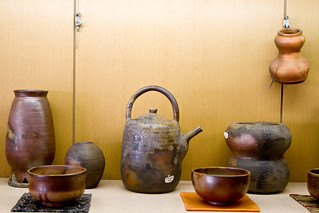
Once I was lucky enough to visit the house of a potter, one who made bizen-yaki. This was, in part, the inspiration for the story in Practice Perfect.

Brownness is it's main characteristic. But like many things that first seem plain to a foreigner in Japan -- what with our being used to gaudy brashness -- the subtlety of bizen-yaki grows on you after a while.
Bizen Ceramics

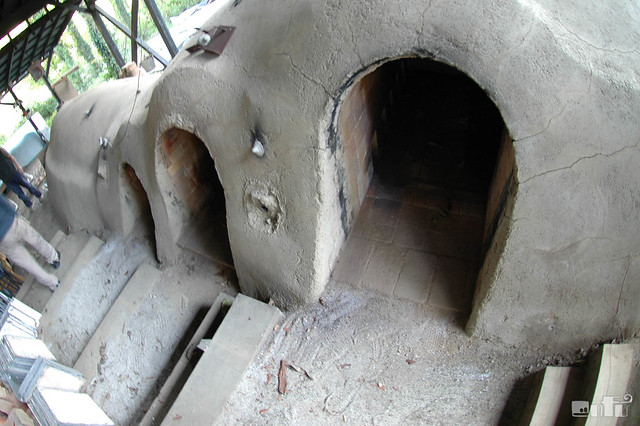
This potter had this massive kiln, something like this one:

enfu_6jizo_019

in which he could fire thousands of pots at a time. In fact, they only did two firings a year, as I recall -- quite an occasion apparently.

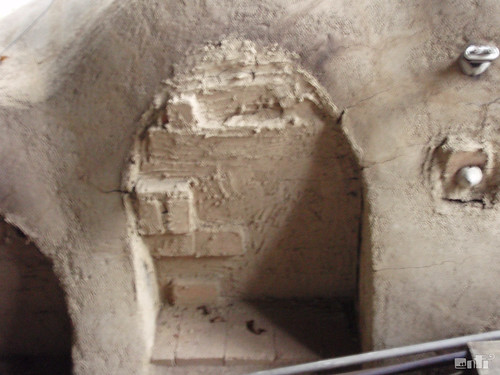
The ends were sealed off like this for the firing:

enfu_6jizo_030

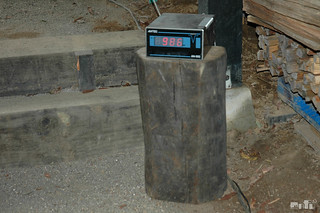
and it would be lit for days at a time, reaching an impressive temperature.

enfu_6jizo_003

Next post: musical notes on Practice Perfect.

Saturday, February 20, 2016

Practice Perfect


I arrived in Japan and made my inaugural speech to the 1200 kids in my high school. This was in English so I kept things simple: I play the guitar; I like soccer. That sort of thing. Next day, to my surprise, the captain of the soccer club approached me and asked if I would come along to practice.

I went to my first one, after school on a blisteringly hot August afternoon. We did various drills, passing, dribbling, etc. This went on for about an hour-and-a-half. I, having come from a Southern Hemisphere winter, was thankful for the Mugi-cha that was on offer to quench the thirst. I was pretty buggered, frankly, but thanked them for the run out. The captain said they were only stopping for a break. Ah, really? I stuck it out in the heat and was pretty glad when we finished. When is the next practice, I inquired? Tomorrow. Every day, in fact. Wow, I said, you guys must have some big games coming up. Nope, no games, we just practice.

I didn't make it back for another practice.
Practise by George Alexander Ishida Newman (CC BY)

This tune celebrates the Japanese love of the familiar, of dedication and of the value in skill and art for it's own sake. I chose a potter as the central character in this particular story but it could have been any number of things: kids' relentlessly practising baseball or kendo or whatever; musicians, calligraphers, flower arrangers. Common to many of these pastimes or art forms, perfection is never attainable but something to be pursued.

Here I framed the theme in the broader context of traditional arts and the fear that these will be lost. The father is worried that his son (who is an oblique reference to the yet-to-be-released July track) won't carry on the art. But the traditional arts and strong and the Japanese will find a way...

Next post: it's many shades of brown, it's pottery, it's the local pottery!